Why European Butter Is Preferred by Bakers
In a professional kitchen you need to find everything you can to elevate your products to the next level. This comes down to skills, knowledge and creativity, but also using the best quality ingredients. European-style butter comes into this category because it brings qualities and characteristics that can’t be substituted by inferior alternatives, and when baking in a professional kitchen this is a critical difference.
What is European-style butter?
The European Union (EU) dictates that butter made in the EU must have a fat content of between 80 and 90%. As a result, most butter producers settle on a butterfat range between 82-84%. This slightly higher fat content, compared to US-style butters which tend to average around 80% fat content, brings various characteristics and behaviours which enhance baked products such as cakes, pastries, bread and pies.
The qualities which make European-style butter ideal for baking
- Colour – The cows used to produce the milk for European-style butters are generally fed on natural pastures of grasses, herbs and wildflowers. This results in a deeper yellow colour and a more natural flavour, compared to US-style butters which come from cows usually fed on corn or soy products. These butters are paler and more neutral-flavoured.
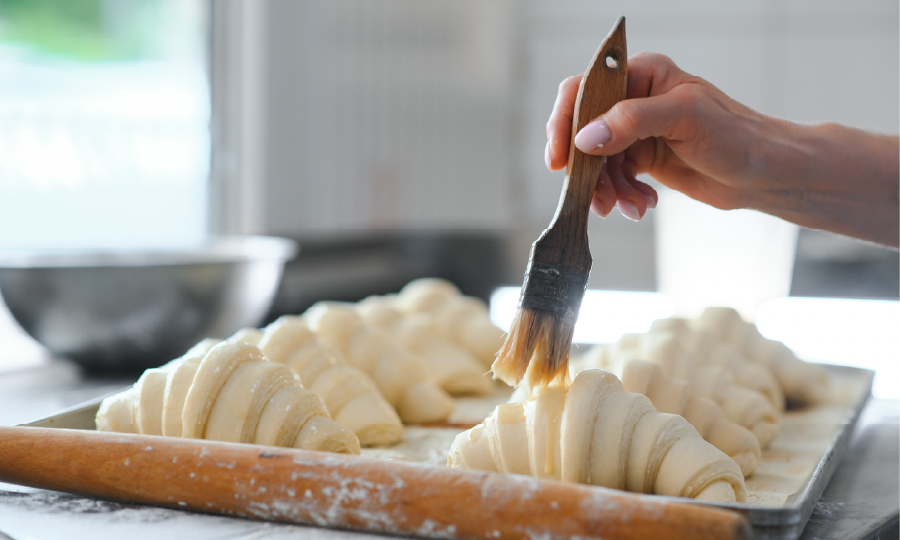
- Water content – High fat content equals less water content. This produces less steam which gets trapped when in the oven and avoids products feeling dense, heavy and soggy when they come out. The higher fat content therefore results in a softer and more delicate crumb in cakes, cookies and biscuits and more distinct layering in lighter pastries, such as croissants.
- Working doughs – The high fat content in European butters means it remains stable and doesn’t melt too quickly. This means you can work doughs harder and fold them better at room temperature, and this pliability produces a better-quality dough for cakes, breads, cookies and pastries. The results of this will be seen in the finished product.
- Flavour – A higher fat content produces a more intense, indulgent and buttery flavour. This comes from a longer churning process which concentrates the rich flavour and is helped by culturing, as described below.
- Cultured – Culturing is the process of adding live bacterial cultures to milk and allowing them to ferment before being churned. This helps with a more delicate and tenderised texture in the finished product, but also produces a more complex, pronounced and tangier taste.
- Quality – European butters, and particularly those made in France, are heavily regulated and quality-controlled. In France, butter production follows strict procedures to control the quality of milk and the eventual butter.
The small difference between European and other styles of butter, usually the 2 or 3% extra fat content, may seem small, but it is a critical element in elevating quality of taste and texture. This is why professional kitchens use the best quality European-style butter for baking.


- CO-OPERATIVE FARMING
- N°1 French DAIRY COOPERATIVE
- 10,600 farms
- Single BATCH TESTED
- TRADITIONAL French RECIPE
- 19,959 farmer-owners
GET IN TOUCH
We love to hear feedback on our butter. Join our kitchen or for partnering send us a message.
part of the SODIAAL group

Carefully crafted at our award winning plant in Clermont-Ferrand, which has been producing Traditional French butter since 1870.