
Why Pastry Chefs Prefer High-Quality Butter
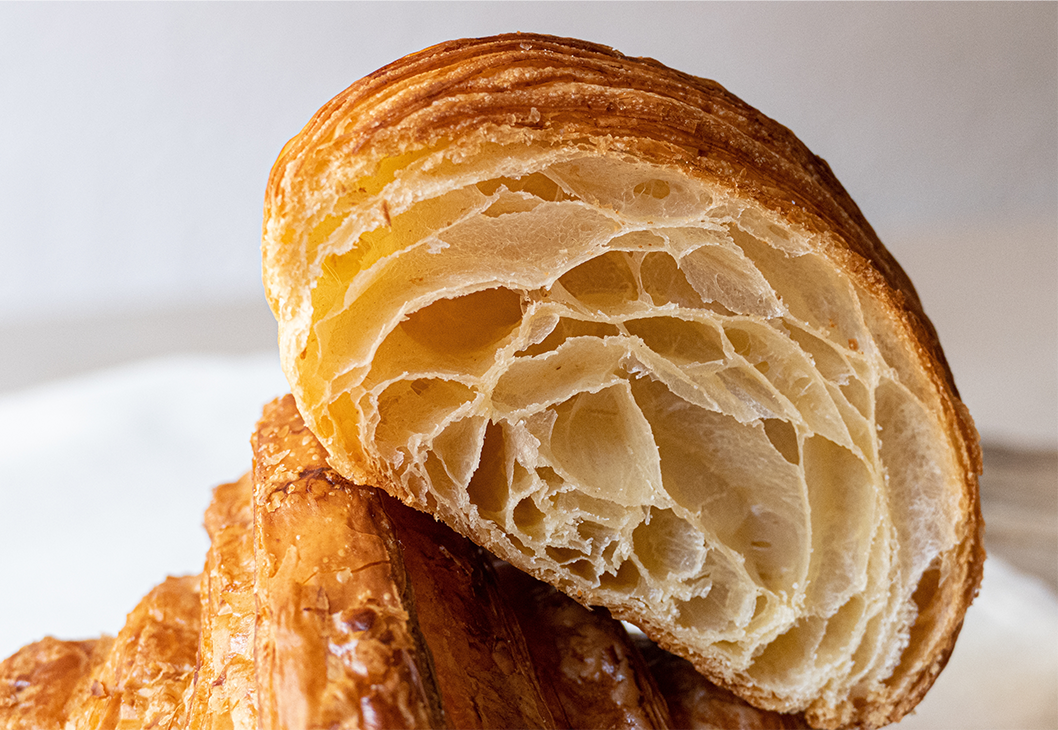
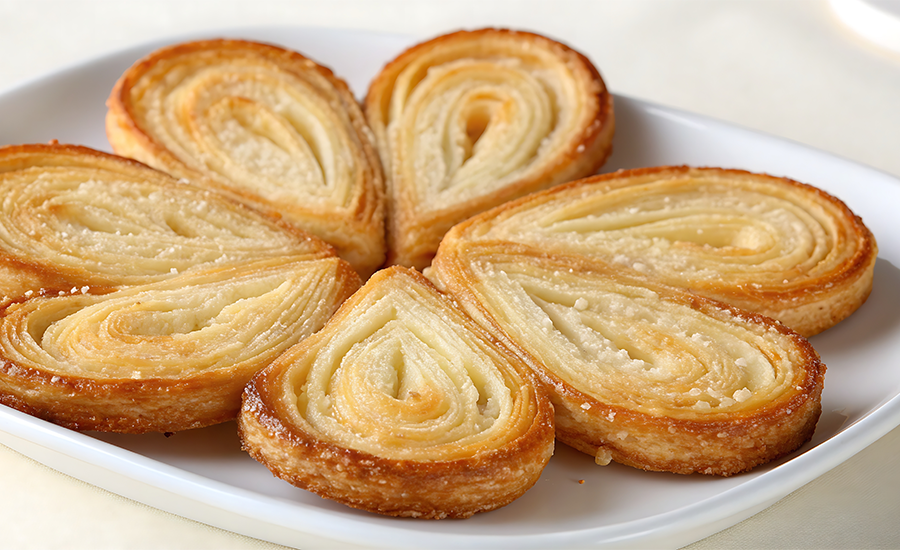
The process of making laminated pastry dough is one of the most important and popular elements of baking, and is a world-renowned process which produces some of the most delicious products and pastries, not least the world-famous croissant. Laminated pastry dough produces flaky, crisp and delicate pastries which melt in your mouth, and that sweet spot is achieved through using a good quality butter. But whether you are a domestic or a professional chef, how do you achieve that perfect layering and what is the best butter to use?
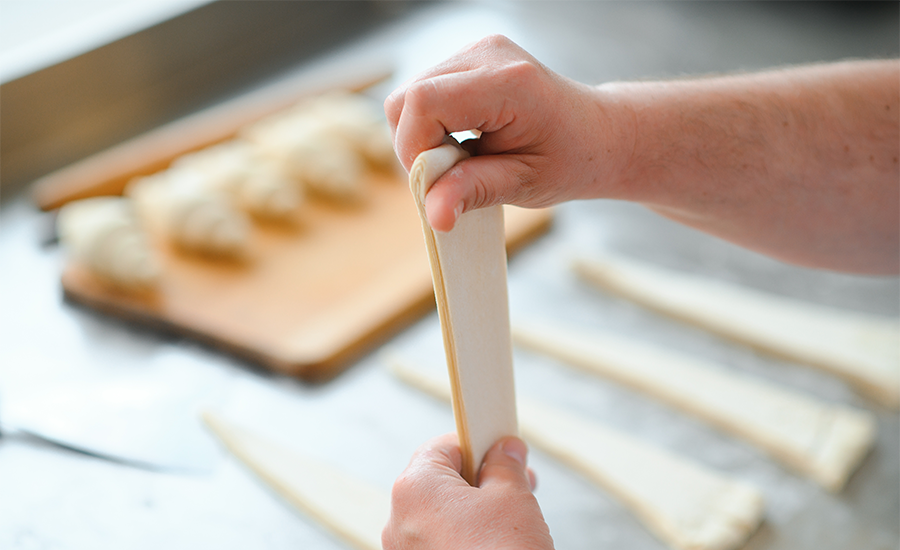
Butter is an essential ingredient in laminated dough because it has a great flavour, but the technical reason is that you need to fold the butter into the dough mixture repeatedly in order for the distinctly thin and consistent layering to be possible. By doing this we are able to trap steam between the layers as the dough bakes in the oven, and the layers expand evenly. This creates the distinctive flaky and ‘puffy’ effect and gives the pastry the desired texture and light structure. Butter achieves all this better than other types of fat mainly due to its melting properties, so as you might expect, the quality and type of butter used is therefore critical to how this is achieved and how effective the results are.
Qualities needed in a butter to achieve good lamination
- High fat content – French-style butters have a higher fat percentage than standard butters, with a minimum 82% rather than 80%. This higher fat content reduces the water content accordingly, which is the balance you need to prevent too much steam being produced in the oven. This would mean the steam bursts through the dough and makes the results soggy and heavy, rather than being trapped between the layers and making the results light and crisp.
- Pliable – The higher fat content also means the butter has more elasticity and is able to be worked when cold, and that it won’t melt in the process and will stay stable in the dough. A different type of butter might melt too quickly meaning you can’t work the dough enough to achieve good lamination.
- Unsalted – Although salted butter provides good flavour for your pastries, it is better to use unsalted butter so you have complete control over the flavour and can therefore add salt as needed to create the right balance. Using unsalted butter avoids the risk of putting too much salt in your dough.
- Cultured – French butter is cultured, or fermented, which gives it a much richer taste profile and adds complexity and tanginess to your resulting pastries.
A French butter such as the unsalted butter produced by Douceur de France is ideal for making laminated pastry dough, because it has all these four qualities. This enables a chef to produce the right flakiness in texture and richness in flavour, and to produce the overall quality needed for laminated pastries.

- CO-OPERATIVE FARMING
- N°1 French DAIRY COOPERATIVE
- 10,600 farms
- Single BATCH TESTED
- TRADITIONAL French RECIPE
- 19,959 farmer-owners
GET IN TOUCH
We love to hear feedback on our butter. Join our kitchen or for partnering send us a message.
part of the SODIAAL group


Carefully crafted at our award winning plant in Clermont-Ferrand, which has been producing Traditional French butter since 1870.