Why Pastry Chefs Prefer High-Quality Butter
Professional baking is about unique products and high standards, and both of those are supported by the use of the best possible ingredients. A professional kitchen will have a reliable source for all its key ingredients and butter definitely comes into this equation. Butter has a huge influence in professional baking as a foundational ingredient and here we have outlined some important elements of what its role is in different types of baking.
- Structure
Butter plays a big part in the structure of baked products, mainly through the ‘leavening’ process. This is when butter is combined with sugar to make a cream. When the sugar granules combine with the fat in the butter they trap millions of tiny air pockets. This the main factor in creating volume in a resulting product, such as a cake for example. These air pockets expand in the oven and therefore butter is essential in acting as a ‘leavening agent’ to give products structure and volume.
- Flavour
Tastes and aromas in baked products are distributed using the fat-soluble compounds found in butter. This is therefore essential in giving baked products a unique flavour profile. The fat content in butter develops a richness and a tanginess which comes from the natural lactic acids which are produced when the butter is heated to melting point. Alternative ingredients don’t have this same purity and can’t replicate this taste, nor can inferior butters which have lower fat content and rely on additives to provide flavour.
- Lamination
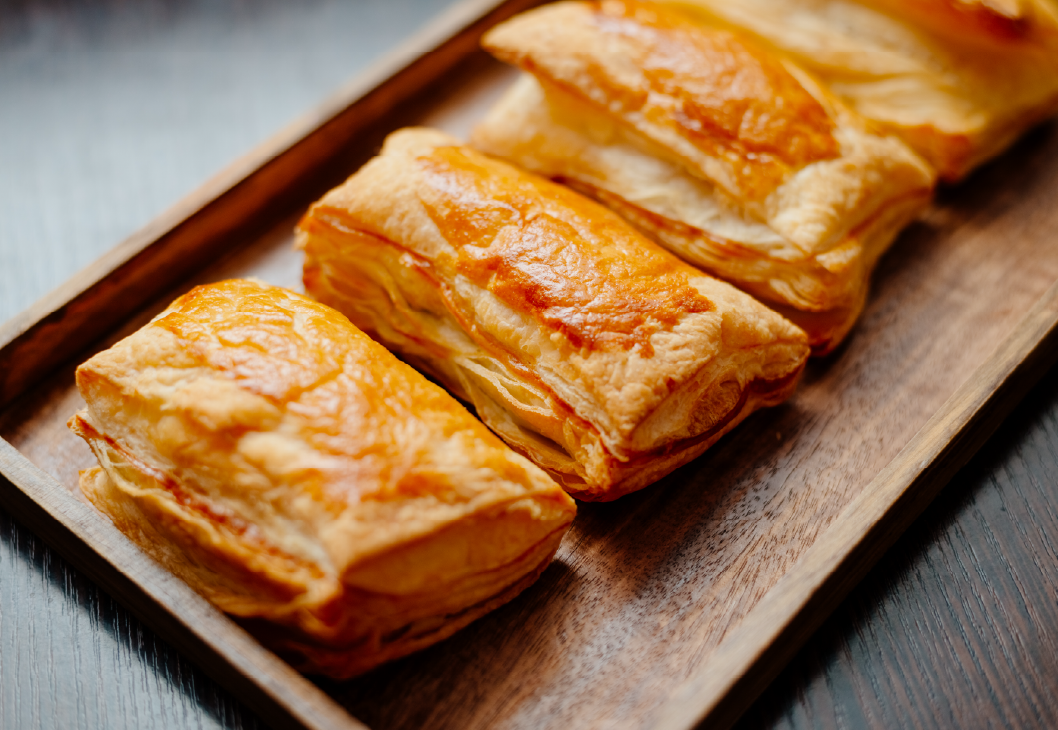
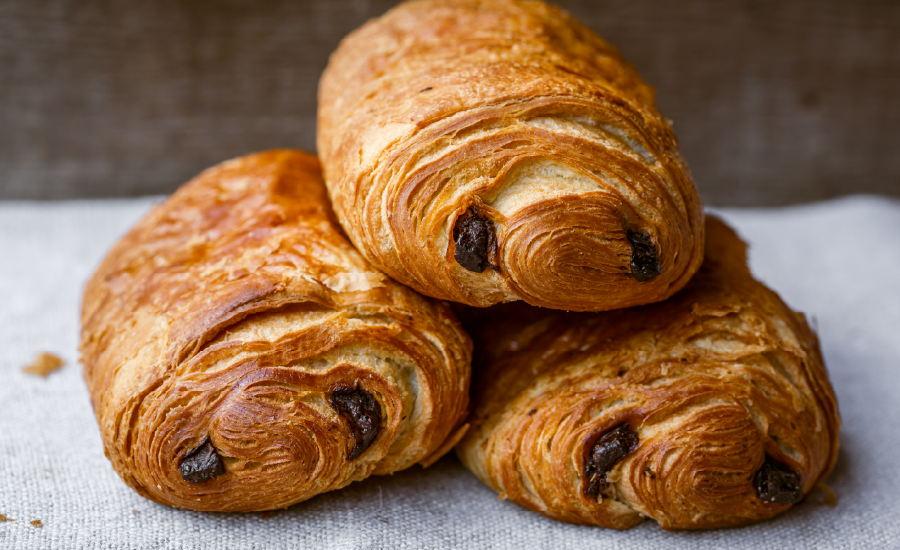
Butter with a higher fat content (a minimum of 82%, rather than 80%) is ideal for producing folded layers of dough for delicate pastries. This is because the water in the butter evaporates and the steam produced forces the layers apart in the oven, producing the light, flaky airiness that is perfect for croissants and other light pastries. Butters with a lower fat content carry too much water content as a result, and hence this water doesn’t evaporate in the oven, leaving the resulting pastries dense, flat and soggy.
- Texture
When making breads and more crumbly products such as biscuits and cookies, butter prevents excessive gluten development, which means the crumb is softer and more delicate. While this breaks up more easily, it also provides the melt-in-the-mouth characteristic that many people love. Breads without fat, such as a baguette, have a crusty exterior and a chewy interior, while breads with fat are altogether tender and softer.
- Caramelisation
This is the process through which milk solids and natural sugars react with butter when exposed to heat. The result is a solidified, brown mixture which develops a deep, complex flavour and a natural golden crust.
Professional bakers prefer to use unsalted butter, as it means they can add salt as needed and therefore have more control over flavour. And they also prefer butter with a higher fat percentage, such as good quality French butter, as this provides many of the benefits listed above.

- CO-OPERATIVE FARMING
- N°1 French DAIRY COOPERATIVE
- 10,600 farms
- Single BATCH TESTED
- TRADITIONAL French RECIPE
- 19,959 farmer-owners
GET IN TOUCH
We love to hear feedback on our butter. Join our kitchen or for partnering send us a message.
part of the SODIAAL group

Carefully crafted at our award winning plant in Clermont-Ferrand, which has been producing Traditional French butter since 1870.