Why Pastry Chefs Prefer High-Quality Butter
Baking is a delicate art and the smallest ingredients can make the most difference. Butter is an ingredient that is underrated in terms of its influence and the quality of butter can have a profound effect on whether pastries are light and flaky or dense and soggy, or whether cookies melt-in-the-mouth or leave a dry and uninspiring taste.
For this reason, professional chefs carry out considerable research on the best butters to buy and insist on quality and consistency in their butter. So let’s try and understand why that is the case.
Why butter is so important in baking
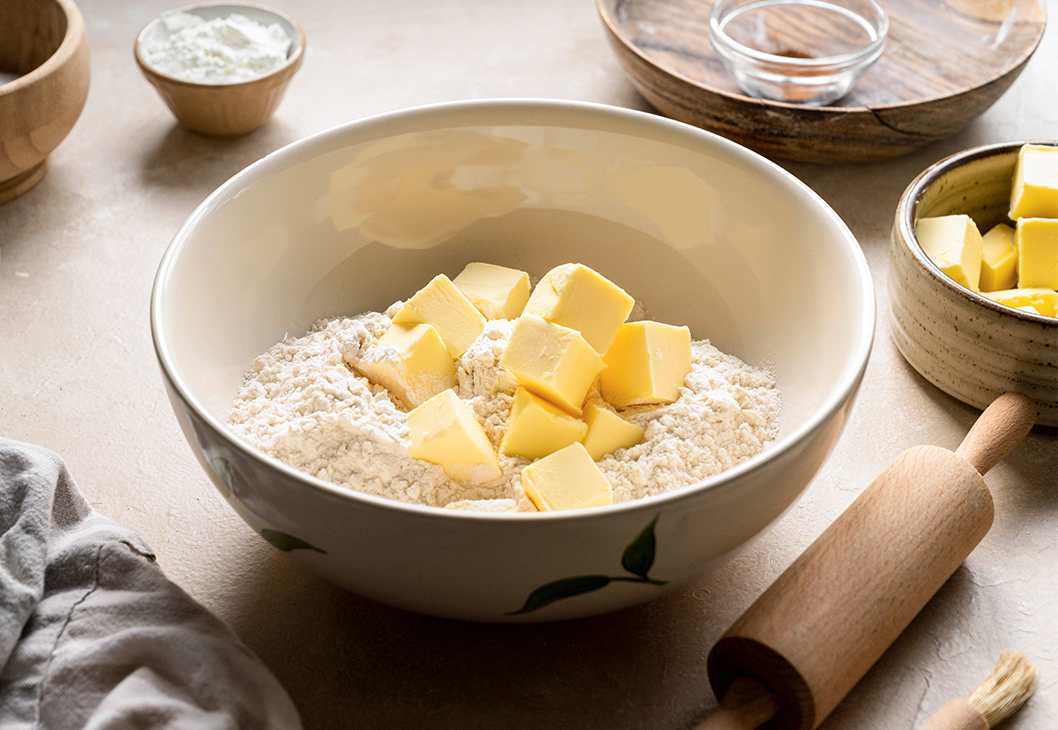
Butter provides fat in baking, of course, but it also provides moisture, texture, structure and flavour. When butter is melted in an oven it produces steam. This is vital to how a dough or a mixture rises and lightens, and therefore how its delicate structure is formed. You can follow a recipe dutifully, but use the wrong type of butter and your resulting product will be flat, dense and soggy, and may have a greasy finish also. Use the right butter and it will be light, flaky and crisp.
What is the best butter to use in baking?
Most professional chefs will insist on a butter with a high butterfat percentage, usually around 82% compared to the standard 80%. Butter with a higher fat content will have a richer, more nuanced taste, but the bigger impact is on texture. A lower fat content butter will have more water content, which affects the dough and the resulting product will be dense and heavy. Higher fat content butter has the opposite effect, which is what you want for baked goods such as pastries, cookies, madeleines or a Brioch bun.
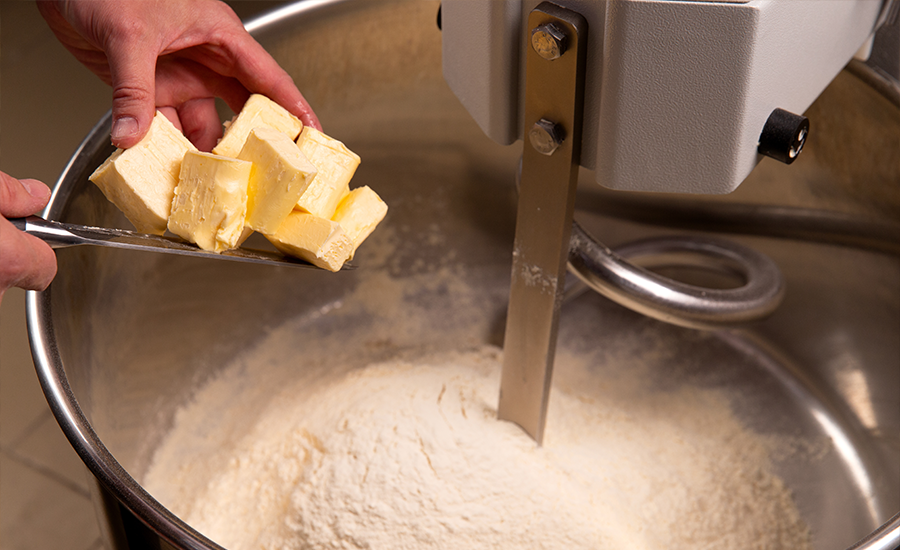
Higher fat content butter can be worked cold, and doesn’t melt too quickly into your dough. This allows a chef to create better lamination, and traps air in the dough, leading to lighter products and a better quality of flakiness in a pastry. In baking it is always important to keep your butter cold. Butter contains molecules of water and when cold, these are distributed amongst the fat molecules and therefore hold a firm structure. When the butter gets warmer, the fat molecules melt and the water molecules can move more freely. This makes the butter harder to work with and also leads to the water combining with flour to form gluten, which can make the dough stretchy and chewy, which no chef wants.
The best quality butter for baking
Once a professional chef finds the right quality of butter, they will stick to it. This is because consistency is everything in professional cooking. You need to rely on achieving the same results every time, not just for the reputation of your kitchen, but for stocks, availability of materials and for the efficiency of your operations. For this reason, most professional chefs opt for high fat content French butter in order to achieve the best results.

- CO-OPERATIVE FARMING
- N°1 French DAIRY COOPERATIVE
- 10,600 farms
- Single BATCH TESTED
- TRADITIONAL French RECIPE
- 19,959 farmer-owners
GET IN TOUCH
We love to hear feedback on our butter. Join our kitchen or for partnering send us a message.
part of the SODIAAL group

Carefully crafted at our award winning plant in Clermont-Ferrand, which has been producing Traditional French butter since 1870.